

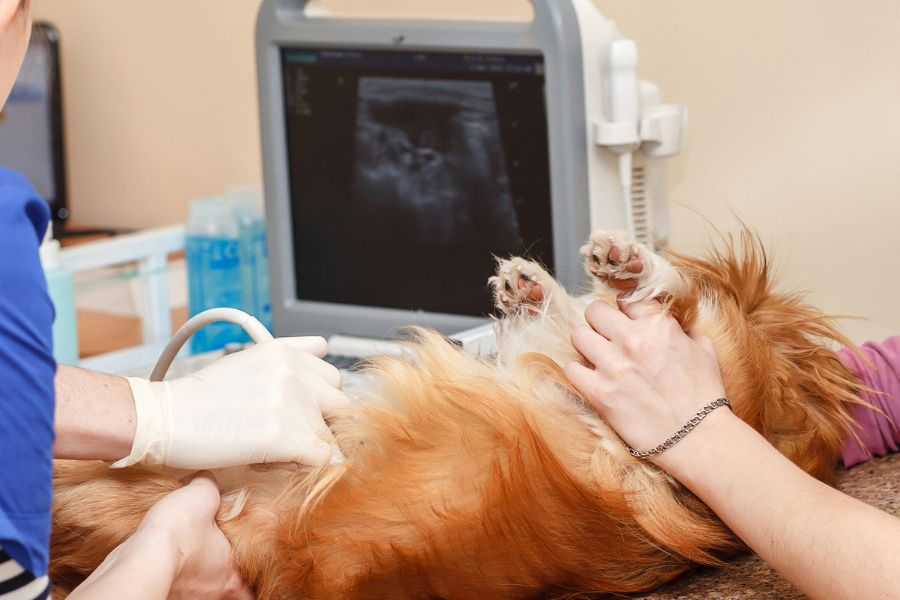
When a pet isn’t feeling well, getting an accurate diagnosis quickly is one of the most important steps toward effective treatment. While physical exams and laboratory testing provide valuable information, they don’t always reveal what’s happening inside the body. That’s where advanced diagnostic imaging becomes essential. Veterinary ultrasound allows veterinarians to view internal organs in real time, helping identify health concerns faster and with greater precision.
In this guide, we’ll explain why veterinary ultrasound matters, how it differs from X-rays, what conditions it can help diagnose, and why advanced imaging plays such an important role in modern veterinary care. Understanding these tools can help pet owners make informed decisions when their pets need answers quickly.
What Is Veterinary Ultrasound?
Veterinary ultrasound is a non-invasive imaging technique that uses sound waves to create real-time images of structures inside the body.
Unlike surgical procedures, ultrasound allows veterinarians to examine internal organs without making incisions. The technology produces detailed images that help assess organ size, shape, movement, and function.
Ultrasound is commonly used to evaluate:
- Liver
- Kidneys
- Spleen
- Bladder
- Intestines
- Stomach
- Heart
- Reproductive organs
Because the images are produced in real time, veterinarians can observe how organs function during the examination.
How Ultrasound Differs From X-Rays
Both veterinary ultrasound and X-rays are valuable diagnostic tools, but they provide different types of information.
1. Veterinary X-Rays
X-rays are particularly useful for evaluating:
- Bones and joints
- Fractures
- Arthritis
- Foreign objects
- Lung conditions
- Certain abdominal abnormalities
They provide a static image of internal structures.
2. Veterinary Ultrasound
Ultrasound excels at evaluating:
- Soft tissues
- Organ structure
- Fluid accumulation
- Blood flow
- Organ movement
Because these technologies complement one another, veterinarians often use both when investigating complex medical conditions.
Why Faster Diagnosis Matters
When pets become sick, delays in diagnosis can sometimes allow conditions to worsen.
Advanced imaging helps veterinarians:
- Identify abnormalities earlier
- Narrow down possible diagnoses
- Develop treatment plans more quickly
- Reduce unnecessary testing
- Improve pet outcomes
The sooner a problem is identified, the sooner appropriate treatment can begin.
Common Reasons Your Pet May Need an Ultrasound
There are many situations where veterinary ultrasound can provide valuable information.
1. Persistent Vomiting or Diarrhea
If digestive issues continue despite treatment, an ultrasound can help identify:
- Intestinal inflammation
- Foreign objects
- Tumors
- Organ abnormalities
2. Unexplained Weight Loss
Sudden or ongoing weight loss often requires a deeper investigation into internal health.
Ultrasound can help evaluate organs that may be contributing to the problem.
3. Changes in Appetite
Loss of appetite can be linked to a variety of conditions affecting the digestive system, liver, kidneys, or other organs.
4. Abdominal Pain
Ultrasound allows veterinarians to examine abdominal structures in detail and identify potential sources of discomfort.
Detecting Internal Organ Disease
One of the biggest advantages of veterinary ultrasound is its ability to evaluate soft tissue organs.
Liver Conditions
Ultrasound can help detect:
- Liver enlargement
- Abnormal tissue changes
- Masses
- Fluid accumulation
Kidney Disease
Kidney abnormalities may be visible long before symptoms become severe.
Bladder Problems
Ultrasound can identify:
- Bladder stones
- Inflammation
- Masses
- Structural abnormalities
This detailed information helps veterinarians determine the best course of treatment.
Identifying Masses and Tumors
When a mass is suspected, an ultrasound can provide important details about:
- Size
- Location
- Shape
- Relationship to nearby organs
In some cases, ultrasound-guided sample collection may be recommended to obtain additional diagnostic information.
Early detection often improves treatment options and outcomes.
Monitoring Pregnancy in Pets
Ultrasound is commonly used during pregnancy to monitor the development of puppies and kittens.
Benefits include:
- Pregnancy confirmation
- Monitoring fetal development
- Assessing viability
- Estimating progression
Because ultrasound is non-invasive, it is considered a safe imaging option during pregnancy.
Evaluating Heart Function
Specialized cardiac ultrasound, known as echocardiography, allows veterinarians to evaluate the heart in motion.
This can help diagnose:
- Heart disease
- Valve disorders
- Structural abnormalities
- Changes in blood flow
Early identification of cardiac issues often allows for more effective long-term management.
Is Veterinary Ultrasound Safe?
Yes. Veterinary ultrasound is considered extremely safe.
Unlike X-rays, ultrasound does not use radiation.
Additional benefits include:
- Non-invasive procedure
- Minimal discomfort
- Real-time imaging
- No surgical incisions
- Valuable diagnostic information
Many pets tolerate ultrasound examinations very well.
Some pets may require mild sedation depending on their comfort level and medical condition.
What Happens During an Ultrasound Appointment?
The process is generally straightforward.
Step 1: Preparation
The area being examined may be shaved to improve image quality.
Step 2: Ultrasound Gel Application
A specialized gel is applied to ensure proper contact between the probe and the skin.
Step 3: Imaging
The veterinarian moves the ultrasound probe over the area while viewing images on a monitor.
Step 4: Interpretation
The images are evaluated to identify any abnormalities and guide further recommendations.
Many ultrasound examinations can be completed relatively quickly.
How Advanced Imaging Supports Better Treatment Decisions
Advanced imaging provides information that cannot always be obtained through physical exams or bloodwork alone.
Combining veterinary ultrasound with X-rays and laboratory testing allows veterinarians to develop a more complete understanding of a pet’s condition.
It often leads to:
- Faster diagnoses
- More accurate treatment plans
- Better monitoring of chronic diseases
- Improved pet outcomes
For pet owners, that means fewer unanswered questions and greater confidence in the care their pet receives.
The Role of a Modern Veterinary Hospital
Today’s veterinary hospitals rely on advanced technology to provide high-quality pet care.
Diagnostic imaging tools such as ultrasound and X-rays help veterinarians:
- Detect disease earlier
- Investigate symptoms thoroughly
- Monitor treatment progress
- Improve overall pet care
Access to advanced diagnostics allows pets to receive timely evaluations and personalized treatment plans.
Advanced Imaging Can Make All the Difference
When pets become ill, every day matters. Veterinary ultrasound provides a safe, non-invasive, and highly effective way to examine internal organs and quickly identify health concerns. Combined with X-rays and other diagnostic tools, ultrasound helps veterinarians make faster, more accurate diagnoses that support better treatment outcomes.
For pet owners, advanced imaging offers peace of mind by helping uncover the cause of symptoms sooner and reducing delays in care. Whether your pet is experiencing digestive issues, unexplained weight loss, abdominal discomfort, or another medical concern, early diagnostic evaluation can make a significant difference.
If you live in Easley or the surrounding communities and your pet requires advanced diagnostic imaging, book an appointment with Paw Prints Animal Hospital. Our veterinary hospital offers comprehensive diagnostic services, including veterinary ultrasound and X-rays, to help identify health concerns quickly and develop personalized treatment plans. By combining advanced technology with compassionate care, we work to provide the answers you need and the quality care your pet deserves.
Frequently Asked Questions(FAQs):
Q1: What is veterinary ultrasound used for?
A: Veterinary ultrasound is commonly used to examine internal organs such as the liver, kidneys, bladder, spleen, heart, and digestive tract. It helps veterinarians diagnose medical conditions, monitor disease progression, and evaluate unexplained symptoms more accurately.
Q2: Is an ultrasound better than an X-ray for pets?
A: Neither is better in every situation. X-rays are ideal for evaluating bones, lungs, and certain abdominal issues, while an ultrasound provides detailed images of soft tissues and organs. Veterinarians often use both together for a complete diagnosis.
Q3: Does my pet need anesthesia for an ultrasound?
A: Most pets do not require anesthesia for a routine ultrasound. Some anxious or uncomfortable pets may benefit from mild sedation, but many examinations can be performed safely while the pet remains awake and comfortable.
Q4: How long does a veterinary ultrasound take?
A: The length of the procedure varies depending on the area being examined and the complexity of the case. Most veterinary ultrasounds are completed within 30 to 60 minutes, including image review and interpretation.
Q5: Is veterinary ultrasound safe for dogs and cats?
A: Yes. Veterinary ultrasound is considered a very safe, non-invasive diagnostic tool. It does not use radiation and allows veterinarians to view internal organs in real time without surgery or significant discomfort.
Q6: When should my pet have an ultrasound?
A: Your veterinarian may recommend an ultrasound if your pet has unexplained weight loss, vomiting, diarrhea, abdominal pain, changes in appetite, abnormal bloodwork results, or symptoms suggesting an internal health problem that requires further investigation.